plain X presented at ARD Barcamp: How broadcasters adapt content for new platforms and audiences
For a full week in November, hundreds of professionals from Germany’s public broadcasting network met virtually to share ideas, projects, and solutions. The ARD Barcamp ran from November 10-14, with 10-15 sessions daily covering everything from journalism workflows to digital distribution, new formats, and production innovations.
Among the sessions: a 30-minute introduction to plain X and how it supports the growing trend of content adaptation across platforms and languages.
Why this matters for ARD
ARD is Germany’s network of regional public-service broadcasters, founded in 1950. Together with its 9 regional members and Deutsche Welle (Germany’s international broadcaster), ARD operates with an annual budget of €6.9 billion and employs around 22,000 people, making it the world’s largest public broadcaster network.
ARD is formed by 9 regional broadcasters and Deutsche Welle
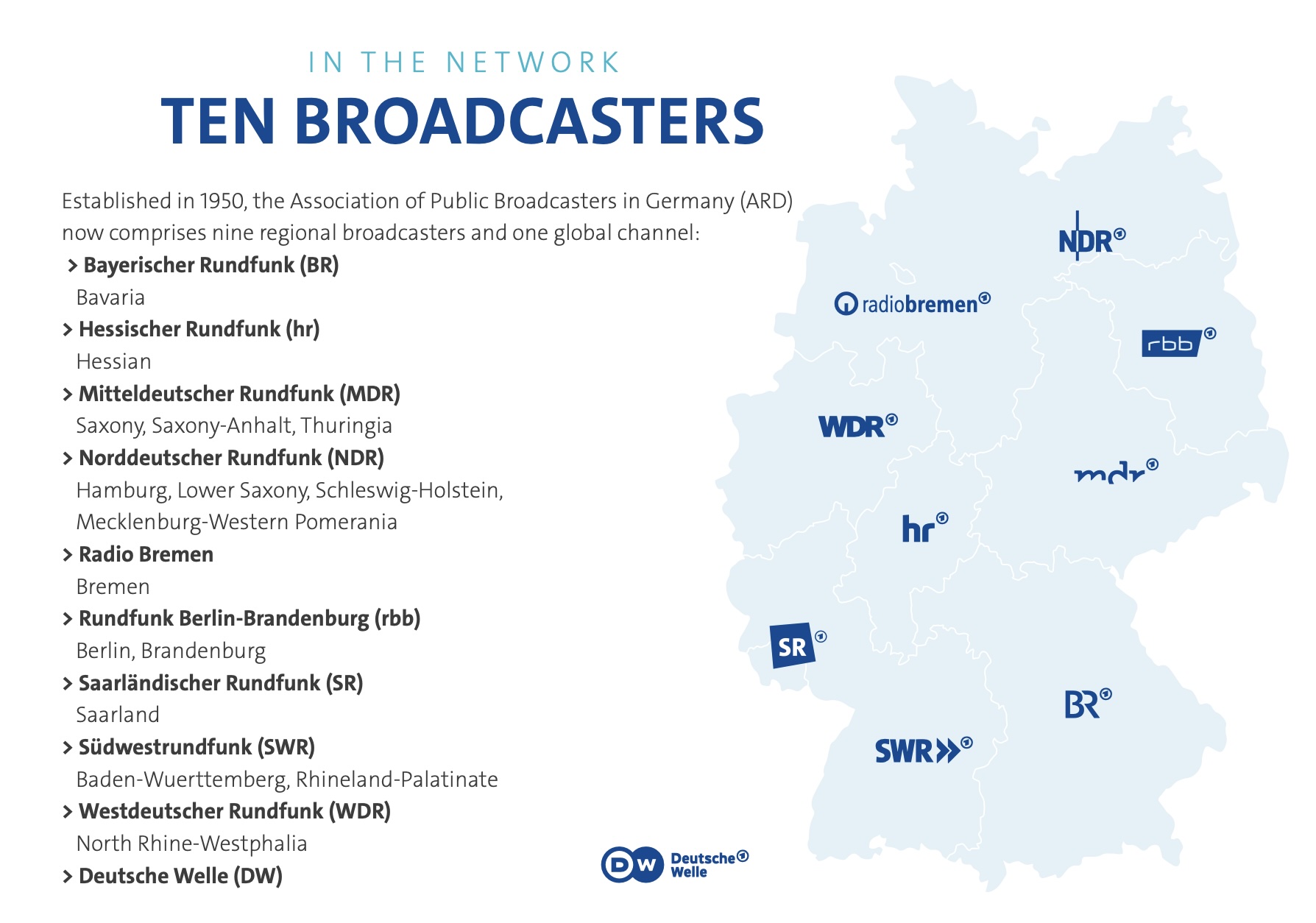
Learn more about ARD’s structure
From single-use to multi-platform: collaboration at scale
Content is no longer produced once for one channel. Today’s workflows demand cross-platform publishing: full programs on streaming libraries, clips on YouTube, summaries on social media. Each version needs subtitles, perhaps translations, sometimes voice-overs.
This is where plain X’s collaboration features shine. When a team creates a quality transcript (AI-processed, then human-verified), that resource becomes reusable. Subtitle templates can be shared across projects. Voice-over scripts can be adapted without starting from scratch. For teams working on tight deadlines, this means saving hours per project while maintaining quality standards.
Accessibility first: meeting the 100% subtitling goal
German broadcasters face ambitious accessibility targets, including 100% subtitling of content. Even when translation isn’t needed (everything stays in German), plain X’s templating system cuts production time dramatically. Editors can work collaboratively, apply consistent styles, and move faster through the subtitle queue without sacrificing accuracy.
Reaching new audiences: migrant communities in Germany
Germany is home to large migrant and refugee communities from Turkey, Ukraine, Syria, Afghanistan, and across Africa. Creating daily news updates or public information in these languages would traditionally require dedicated production teams and substantial budgets.
plain X makes these extensions feasible. AI-supported workflows let smaller teams produce short-form content quickly: a daily news summary, health information, or civic updates in Turkish or Arabic. It’s not about replacing broadcasters’ core German programming but about extending reach to communities who need information in languages they understand.
And voice-over? That too.
Beyond subtitles and transcripts, plain X supports synthetic voice-over production. This matters for documentary rework, archival content, or creating audio versions of text-heavy material. The platform handles the full workflow: transcript refinement, voice generation, and collaborative review, all in one interface.
The response
Interest from ARD participants was clearly positive. Questions came quickly: “How can regional broadcasters get access?” and “Can we test this with our workflows?” The energy in the room made it clear that content adaptation isn’t a future challenge—it’s happening now, and broadcasters are actively looking for solutions.
For public service and commercial broadcasters across Europe: plain X is available for testing at no cost. You can initiate a trial directly through the plain X homepage to explore how the platform fits your specific workflows.
